When Can You Visit Vatnajökull's Ice Caves?
Vatnajökull's natural ice caves run roughly October to April, with November to March as the best window. There's no safe summer version of this tour.
Vatnajökull’s natural ice caves run on one season a year: roughly October through April, with November to March the stretch operators and the national park itself point to as the best. There’s no real version of this tour in summer, and that isn’t marketing caution. The park closes ice cave access for the season, and the caves themselves spend summer carrying meltwater rather than sitting still to be walked into.
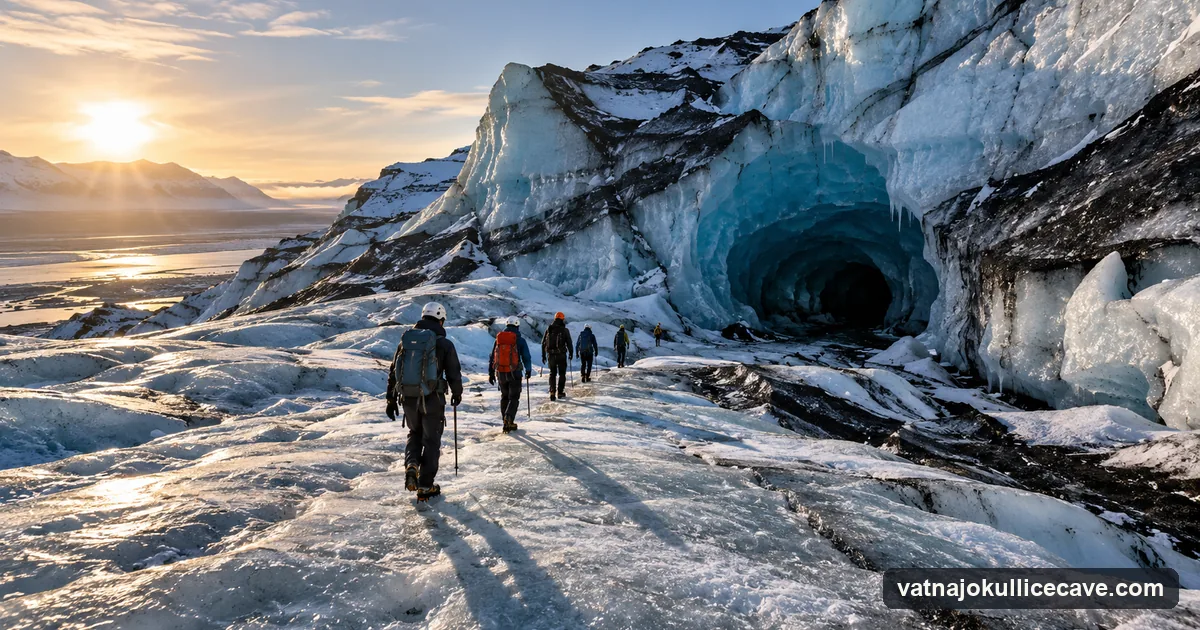
The clearest pick for a winter booking is Local Guide of Vatnajökull’s Original Ice Cave Tour, which meets at Jökulsárlón and rates 4.6 from 1,135 reviews, from about $169 on the booking platform when we checked. Its own booking window opens with the season, generally in October.
The season, month by month
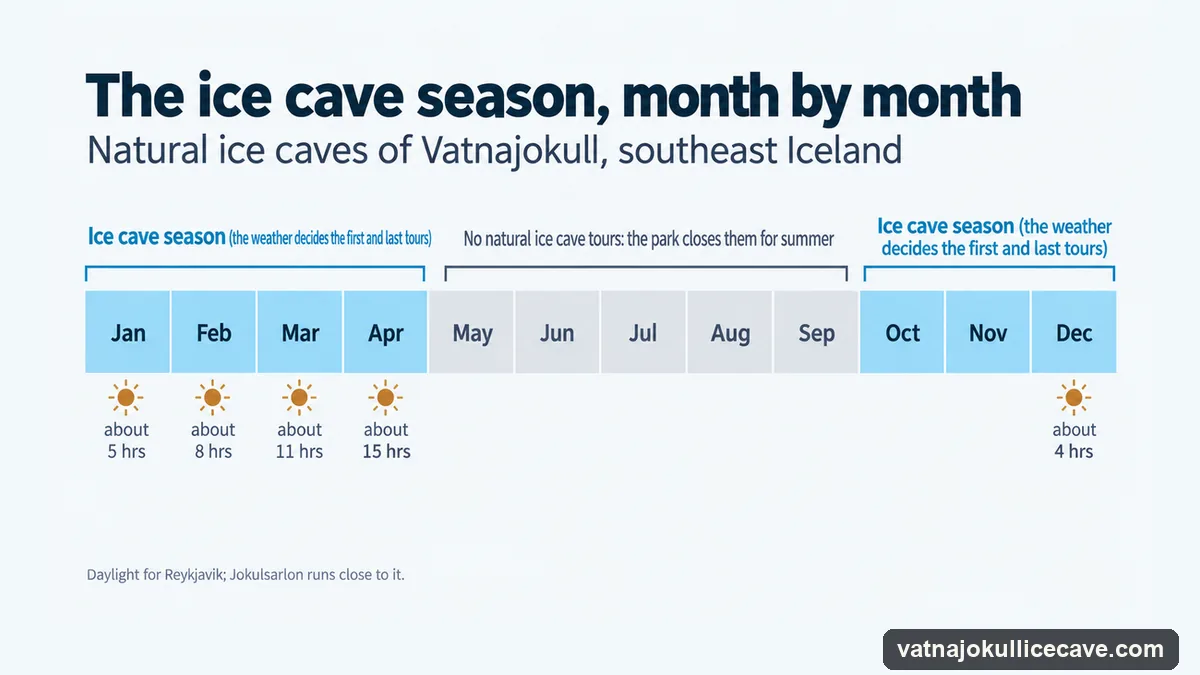
| When | What’s running |
|---|---|
| October | The season generally opens, though an early booking can land on black or ash-grey ice rather than blue, since the glacier hasn’t settled into winter yet. |
| November–March | The core window. Vatnajökull National Park’s own ranger, Steinunn Hödd Harðardóttir, has called this the stretch when consistent cold “makes the ice stronger and the formations more vivid.” |
| April | Tours continue, but the park sets a hard stop: the final tour of the season runs on or before 30 April, earlier if conditions turn before then. |
| May–September | Closed. Vatnajökull National Park does not permit ice cave tours inside its boundary during these months. |
Operators’ own windows sit inside that range rather than matching it exactly. Local Guide of Vatnajökull runs from October to 31 March most years, sometimes into April depending on the weather; the regional tourism association Visit Vatnajökull gives “from November and usually throughout March” as the dependable core. Either way, the date on your own booking is the one that counts, not a rule of thumb from a guide like this one.
Why summer isn’t an option, not even a careful one
This isn’t a seasonal preference the way a beach might have a best month and a bearable one. Icelandic glaciologist Magnús Tumi Guðmundsson and colleagues found that ice cave tours should never run in summer, because these caves are the glacier’s main channels for large and often unpredictable meltwater flows. In plain terms, the tunnel you’d walk into in July is doing the job of a drainpipe. Vatnajökull National Park’s practice follows that finding rather than just erring on the side of caution, which is why “ice cave tours will be banned in Vatnajökull National Park this summer” is a line Iceland Review could quote directly from the park’s own ranger, not a hedge.
Short winter days aren’t the obstacle they sound like
December and January give the Jökulsárlón area roughly four to five and a half hours of daylight, rising to about eight by February and past fourteen by mid-April. That sounds limiting until you remember most of the tour happens inside the glacier or the cave itself, lit by headlamp rather than daylight, so a short afternoon doesn’t shrink the experience the way it would a hiking day. It just means booking with the light in mind rather than assuming a summer-length day.
The same months bring Iceland’s northern lights season, which runs roughly September to April and overlaps almost entirely with the ice cave window. One traveler on this site’s two-day South Coast tour mentioned seeing “amazing auroras” at their hotel on the same February trip that included the ice cave — a nice overlap, though a sighting is never guaranteed and depends on clear skies and solar activity on the night.
If your dates fall outside October to April
Some trips are booked before the dates are flexible, and for those travelers Vatnajökull genuinely isn’t an option, whatever a search result promises. Katla, near Vík, and the man-made tunnel at Langjökull both run all year, which is the honest answer for summer dates rather than a consolation prize. Katla against Vatnajökull sets the three against each other without pretending this glacier has a summer cave it doesn’t.
Inside the window, the biggest variable left is which week. Early and late season can mean duller, more ash-streaked ice before or after the cold fully sets in; the heart of winter is the most reliable stretch for the deep blue most photos show, though no operator can promise it for a specific date months out.
Season explains when. How long a day this actually takes, and whether it’s worth the drive from Reykjavík, are separate questions, covered in is the tour worth it and the drive from Reykjavík. All twelve tours compared on the homepage run inside this same October-to-April window.
Season dates from Vatnajökull National Park’s own site and ranger quotes carried by Iceland Review and Guide to Iceland; operator booking windows from Local Guide of Vatnajökull and Visit Vatnajökull; meltwater research summarised by Grist. Checked October 2026.
Book the Original Ice Cave Tour
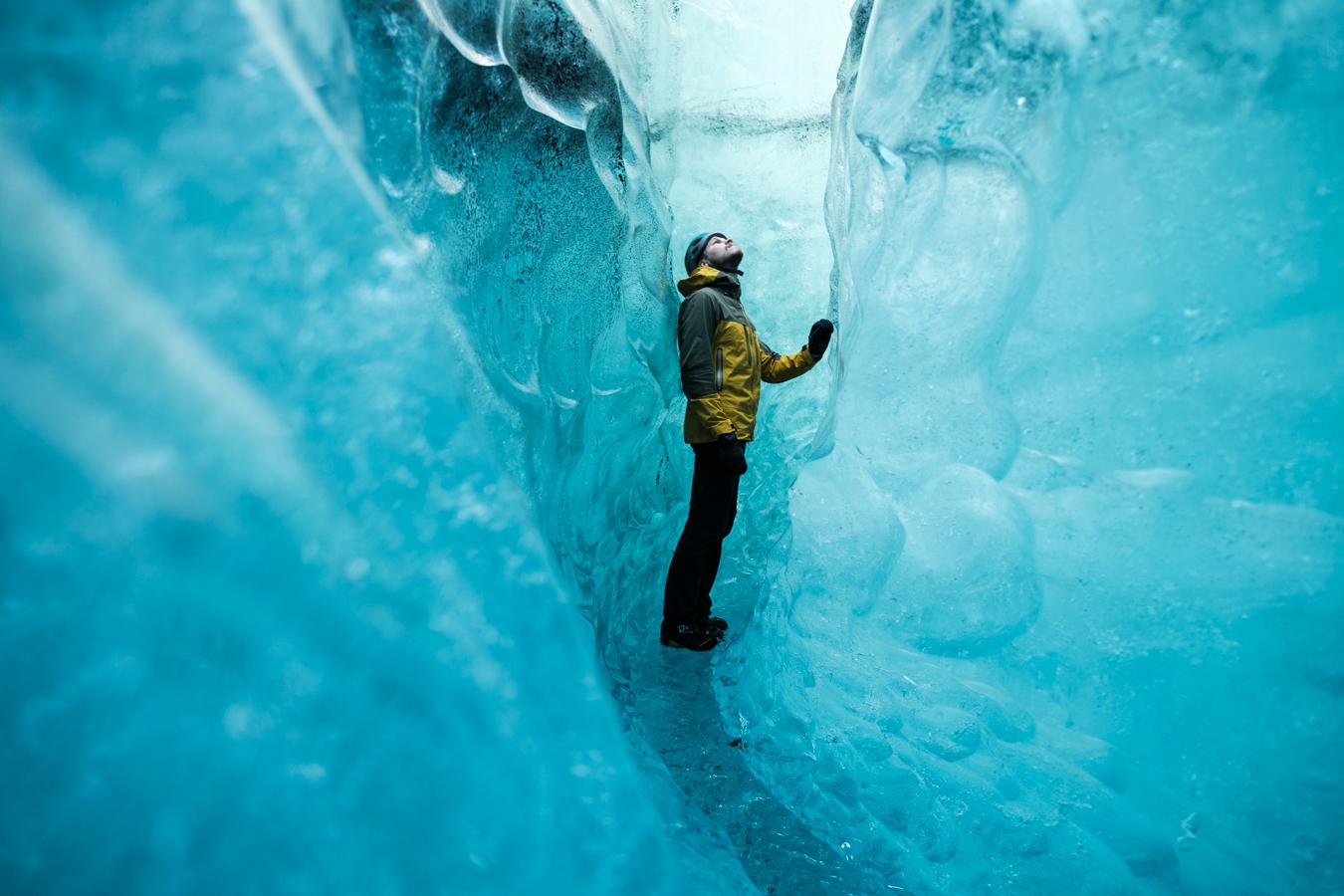
Local Guide of Vatnajökull's small-group tour meets at the Jökulsárlón Glacier Lagoon car park and spends 2.5 to 4 hours on the glacier, with a certified guide choosing whichever blue ice cave, tunnel or crevasse is safest that week. Rated 4.6/5 from 1,135 reviews, with free cancellation up to 24 hours before departure.
Check Availability & Book